

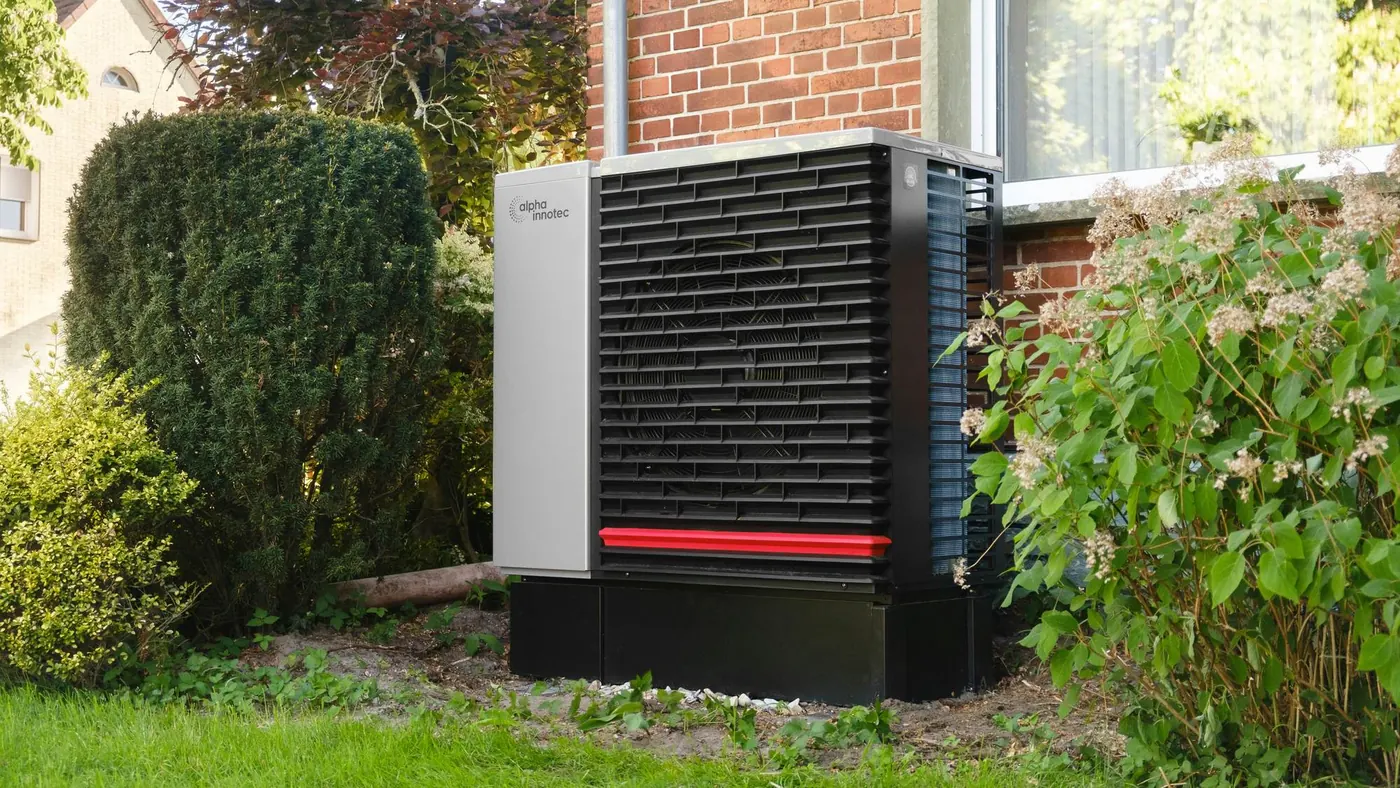
The honest question about a cold climate heat pump in Oro-Medonte is not whether it works, it is how far into a Simcoe County winter it works before something else has to help. Ontario's Building Code sizes heating equipment to a location specific outdoor design temperature, and for the Barrie and Midland area that figure sits in the mid minus twenties Celsius. Which is why a rating taken at mild conditions tells you almost nothing about February.
A cold climate air source heat pump can carry most of the heating season in Oro-Medonte. These units use variable capacity compressors and enhanced heat exchangers to hold heating capacity below minus 15 degrees Celsius, and NRCan notes cold climate models can operate in outdoor temperatures as cold as minus 30 degrees Celsius. Below that, backup or supplementary heat takes over. The specification that matters is rated heating capacity and coefficient of performance at low outdoor temperatures, not the nameplate rating, because capacity falls as the temperature drops.
Can a heat pump actually handle an Oro-Medonte winter?
Natural Resources Canada describes a heat pump as an electrically driven device that extracts heat from a low temperature place and delivers it to a higher temperature place (Natural Resources Canada, 2025). It moves heat rather than making it, which is why it can deliver more heat energy than the electricity it consumes.
The efficiency of that trade changes with the weather. NRCan reports coefficients of performance for air source units ranging from 1.1 to 3.7 at minus 8 degrees Celsius, against 2.0 to 5.4 at plus 8 (Natural Resources Canada, 2025). Cold weather reduces output, and the gap between a poor unit and a good one widens as it gets colder.
Cold climate models are engineered for that. Per NRCan, cold climate models use variable capacity compressors and enhanced heat exchangers to perform better below minus 15 degrees Celsius, and can operate in outdoor temperatures as cold as minus 30 degrees Celsius, while newer air source models generally stop between minus 15 and minus 25 degrees Celsius (Natural Resources Canada, 2026).
Set that against the local design condition. Ontario Building Code Article 9.33.3.2 requires heating systems to be designed to values published in Supplementary Standard SB-1, using the 2.5 percent design temperature criteria. SB-1 has no row for Oro-Medonte or Orillia, so the Code's rule is to use the climatologically closest location: Barrie or Midland.
The specs that matter, and the ones that mislead
A quote listing one capacity figure and one efficiency figure is not enough to decide with. NRCan's air source heat pump sizing and selection guide is direct: evaluate the manufacturer's extended performance data rather than nameplate capacity (Natural Resources Canada, 2020). Here is what each rating tells you:
- COP, the coefficient of performance, is heat output divided by electrical input at one specific temperature. It means nothing unless that temperature is stated.
- HSPF measures heating delivered per watt hour across a season. NRCan notes published HSPF figures are calculated for AHRI Climate Zone V, which has a climate similar to Ottawa, so regional performance varies.
- SEER is the cooling equivalent. You will also see SEER2 and HSPF2 from a newer test procedure. Compare like with like, and ask which rating Canada's minimum standards are currently expressed in.
- Compressor type separates single stage, two stage and variable capacity units. Turn down ratio shows how far a variable capacity unit can modulate, and higher ratios run more of the season without cycling. Cycling degrades performance and creates comfort swings.
- Defrost strategy matters more than people expect. Demand frost controls that sense pressure or airflow are generally more efficient than time and temperature controls that trigger on a fixed clock.
One correction, because it circulates constantly in Ontario renovation advice: sizing here is governed by CSA F280, not the American Manual J procedure. Ask for the F280 calculation by name.
Balance point, backup heat and why that is not a failure
The concept that resolves most heat pump anxiety is the thermal balance point. NRCan defines it as the temperature at which the heating load line intersects the heat pump capacity curve (Natural Resources Canada, 2020). Above that temperature the unit meets the building's full heating requirement on its own. Below it, backup heating is required.
That is a design output, not a defect. Your balance point depends on the home's heat loss, which is why envelope work changes the answer. Air sealing, attic insulation and window performance lower the load line, pushing the balance point colder and handing more of the season to the heat pump.
Two other temperatures matter. The economic balance point is where backup fuel becomes cheaper to run than the heat pump, based on relative fuel costs and the unit's COP. The cut off temperature is where an outdoor control stops heat pump operation entirely. Both are set during commissioning, and a system nobody commissioned properly runs on backup more than it needs to.
One operating note from NRCan that costs nothing to apply: keep thermostat setbacks to no more than 2 degrees Celsius, because heat pumps recover more slowly than furnaces and a deep setback pulls in backup heat to catch up (Natural Resources Canada, 2025).
Ducted, ductless or ground source
Ducted systems suit homes that already have a furnace and a reasonable duct layout. The retrofit constraint is airflow: NRCan notes ducted capacity is limited by existing ductwork, with an HRAI maximum air velocity of 900 feet per minute (Natural Resources Canada, 2020). Undersized ducts cap what the equipment can deliver no matter what you buy.
Ductless mini splits suit homes without ducts, additions, and rooms that never quite kept up. Multi zone systems need careful sizing and controls, because an oversized head on a small zone spends its life cycling.
Ground source, or geothermal, sidesteps the cold air problem by drawing on ground temperatures that stay far more stable than winter air. The tradeoffs are physical. Vertical loops are drilled to depths in the range of 45 to 150 metres where lot area is restricted, while horizontal loops need roughly 120 to 180 metres of pipe per ton of capacity, which is why geothermal suits large rural lots around Hawkestone, Warminster and Horseshoe Valley rather than a subdivision. Equipment life runs about 20 to 25 years, and the ground loop is expected to last far longer (Natural Resources Canada, 2025).
What changes when there is no natural gas line
This is the part of the analysis that gets imported from Toronto and lands wrong. Across much of rural Oro-Medonte, Severn and Ramara there is no natural gas service, so a heat pump is not competing against a gas furnace. It is competing against propane, heating oil, or electric baseboard.
That changes the arithmetic in the heat pump's favour, because electric baseboard delivers one unit of heat per unit of electricity while a heat pump delivers more than one. It also changes the design. A dual fuel setup pairing a heat pump with an existing propane furnace keeps a familiar backup and limits electrical demand, which matters where service capacity is tight. Ask how the controls decide which source runs.
Rural installation details matter too. Raise the outdoor unit above expected snow depth and out of roof runoff, keep it clear of drifting, and plan where defrost meltwater goes so it does not become an ice sheet on a walkway. Confirm panel capacity and electrical permits with a licensed electrician. Fuel fired appliances fall under the Technical Standards and Safety Authority, and permitting questions go to the Township of Oro-Medonte.
Rebates are the one part of this subject with no shelf life. Federal and Ontario incentive programs for heat pumps open, close and change eligibility rules regularly, and a program someone mentioned last year may no longer exist. Before you build any incentive into a budget, confirm what is currently available with your electricity utility and with Natural Resources Canada, and treat a rebate as a bonus rather than the reason for the project.
What to ask for in writing before you sign
When Kimberly walks a rural property with a buyer, the mechanical room tells a story the photos never do. Use this list whether you are installing or evaluating.
- The CSA F280 heat loss calculation, in writing, with the design temperature used.
- Exact model numbers, plus extended performance data showing capacity and COP at low outdoor temperatures.
- Seasonal efficiency ratings with the test standard named, so you compare equivalent numbers.
- The designed balance point, the cut off temperature, and how backup heat is staged.
- Compressor type, turn down ratio, and defrost control strategy.
- Electrical work required, who performs it, and what permits are included.
- Commissioning steps: verified refrigerant charge, airflow measurement and controls setup.
- Maintenance expectations, warranty terms, and the documentation handed over.
That last item pays off later. Keep manuals, model numbers, the commissioning report and service records together, the same way you would keep well water testing and treatment results, and they are ready when you are planning a sale.
Common questions
Will a heat pump keep an Oro-Medonte home warm in winter?
A properly specified cold climate air source heat pump can carry most of the heating season here. These units hold heating capacity below minus 15 degrees Celsius, and NRCan notes cold climate models can operate in outdoor temperatures as cold as minus 30 degrees Celsius. Below that, backup heat takes over, which is a design feature rather than a failure.
What is a heat pump balance point?
The thermal balance point is the outdoor temperature at which the building's heating load line crosses the heat pump's capacity curve. Above it the heat pump meets the whole load alone; below it, backup heating is required. The economic balance point is the temperature at which running the backup fuel becomes cheaper.
Which heat pump specs matter in a cold climate?
Rated heating capacity at low outdoor temperatures matters far more than nameplate capacity, because capacity falls as it gets colder. Ask for the manufacturer's extended performance data, the coefficient of performance at low temperature, the compressor type and turn down ratio, and the defrost control strategy.
Does a heat pump make sense without natural gas service?
That is the situation on most rural Oro-Medonte properties, and it changes the comparison entirely. The alternative is not a gas furnace but propane, heating oil or electric baseboard, and a heat pump delivers more than one unit of heat per unit of electricity while baseboard delivers one.
Heating is a system question, not a product question
The homes that come through winter comfortably here are the ones where envelope, equipment and controls were designed together, which is the same logic behind making a cottage work year round.
If you are weighing a mechanical upgrade against a move, or looking at homes in Oro-Medonte and Severn and trying to read what is in the utility room, it is worth talking through first. You can book a call and I will go through it with you property by property.